
Integrated stainless steel manufacturing
Precision Electropolishing for Stainless Steel Components
BGCNC coordinates CNC machining, preparation, and electropolishing to help high-purity components meet demanding requirements for surface finish, cleanliness, corrosion resistance, and dimensional integrity.
From medical and food-processing equipment to fluid systems, one engineering team manages the manufacturing path and plans for material removal before finishing begins.
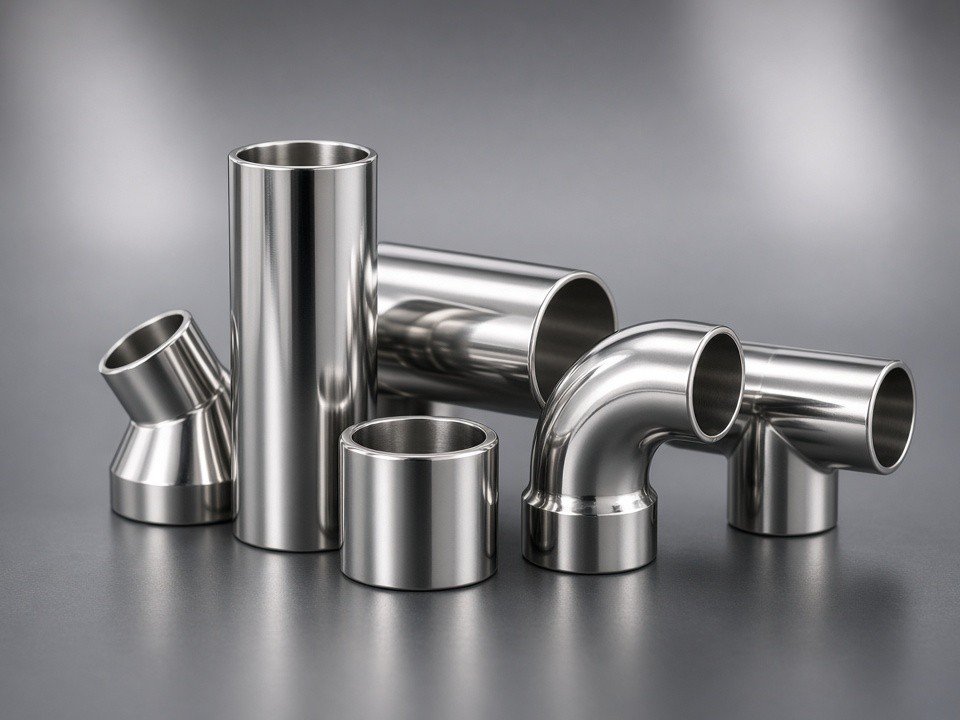
Finish planning starts with the part
Geometry, critical dimensions, and appearance requirements inform the machining allowance and finishing route.
What electropolishing does
A smoother, passivated stainless steel surface
Electropolishing is an electrochemical process that removes a microscopic layer of stainless steel. Rather than smearing surface metal as mechanical polishing can, it dissolves surface peaks and valleys to create a smoother finish.
The resulting surface can improve corrosion resistance and reduce locations where bacteria or particulates may accumulate. For high-purity applications, the process can help achieve specified surface roughness (Ra) requirements for sterile or corrosive environments.
Surface finish
Plan for the target Ra and visual appearance.
Cleanability
Reduce surface irregularities that can retain contamination.
Corrosion resistance
Support demanding cleaning and process environments.
One coordinated workflow
From material selection to verified finish
Separate machining and finishing suppliers can create quality gaps and delivery delays. BG CNC coordinates the sequence so material, geometry, surface preparation, and inspection are considered together.
-
01
Select material
Identify a compatible stainless steel grade, such as 304 or 316L, for the application and finishing requirements.
-
02
Machine the part
Coordinate 3-axis to 5-axis milling and turning around final dimensions and planned material removal.
-
03
Prepare surfaces
Address oils, burrs, and contaminants before the electrochemical bath.
-
04
Electropolish
Coordinate the required surface finish, brightness, and passivation.
-
05
Verify quality
Inspect Ra values, dimensional integrity, and material surface condition.
Designed around dimensional integrity
Account for material removal before finishing
Electropolishing removes material and can affect tight-tolerance features. Our engineering team plans a material-removal allowance during initial CNC machining, considering critical dimensions and appearance requirements before production.
What we review up front
- 01 Critical dimensions and tolerance bands that must remain in specification after finishing.
- 02 Surface and appearance requirements alongside the anticipated removal rate.
- 03 Part geometry, including internal cavities that may be difficult to finish uniformly.
Industries and applications
Finishing for high-purity requirements
We support stainless steel parts where surface integrity, cleanliness, and corrosion resistance are functional requirements.
Medical devices
Surgical instruments and enclosures requiring biocompatibility and resistance to sterilization.
Food and beverage
Processing components designed for sanitary requirements and chemical corrosion from cleaning agents.
Fluid and gas systems
Valves, fittings, and manifolds where smoother surfaces can reduce turbulence and particulate accumulation.
Semiconductor and vacuum
Components requiring high cleanliness and extremely low outgassing.
Engineering and supplier coordination
A single technical point of contact in China
BGCNC operates through a network of 50+ proven manufacturing partners in the Pearl River Delta. Partners are selected based on relevant capabilities, certifications including ISO 9001 and ISO 13485, and experience with complex stainless steel surface treatments.
Instead of vetting and managing multiple vendors yourself, work with one team coordinating supplier relationships, production progress, and final quality control.
50+
Manufacturing partners
A proven supplier network across the Pearl River Delta.
10
Manufacturing engineers
Review CAD drawings and identify potential production issues.
Engineering review that considers the whole process
- Geometry: Assess deep internal cavities and uniform finishing access.
- Tolerance: Check that drawings account for material removed during finishing.
- Surface specification: Compare electropolishing with mechanical polishing and passivation for the required Ra.
Production support
Visibility: Regular updates on machining and finishing stages.
Consistency: Independent inspection before shipment.
Simplified supply chain: One interface for engineering, production, finishing, and logistics.
Common questions
Plan the right surface finish
Will electropolishing change my part dimensions?
Yes. The process removes a microscopic layer of material, so dimensions can change. Share critical dimensions and tolerance bands early so machining allowances can be planned before finishing.
What should I include in a technical review?
Provide 3D files in STEP or IGES format and 2D drawings in PDF, including material, critical dimensions, and surface-finish requirements.
Is electropolishing right for every surface specification?
Not necessarily. The engineering review can compare electropolishing with mechanical polishing and passivation based on your required Ra, geometry, and application.
Start your project
Get an engineering review and quote
Send your stainless steel component drawings for a technical review. We will assess the design, identify a suitable manufacturing and finishing path, and prepare a competitive quote.
For an accurate assessment, include 3D files (STEP/IGES) and 2D drawings (PDF) with your surface-finish requirements.