
Plastic Injection Molding for Production
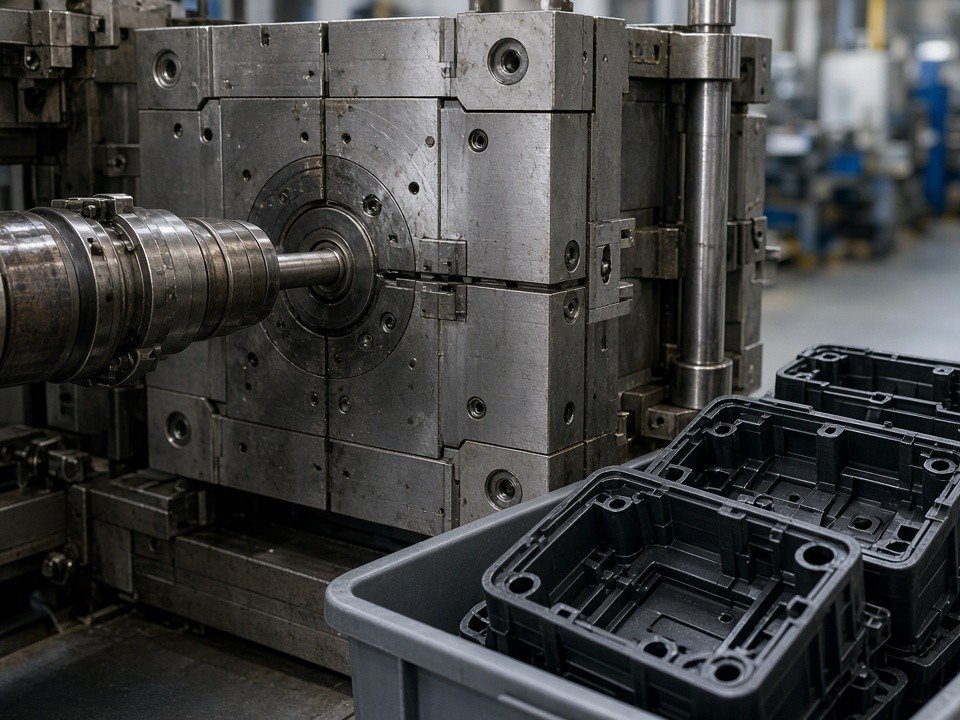
BGCNC coordinates plastic injection molding for hardware companies moving validated parts into repeat production. We manage the path from mold review and tooling through trial shots, revisions, production molding, and agreed post-processing—alongside our network of proven manufacturing partners in China.
If your design has passed verification and you’re assessing mold investment, annual demand, piece cost, and production risk, send us your drawings and forecast for an engineering review and RFQ.
Proven manufacturing partners
Manufacturing engineers
Years average experience
Coordinated project interface
A mold is a production investment, not just a tool
Injection molding forms parts by injecting molten plastic into a mold cavity. Once the mold is approved and the process is stable, it can produce repeat parts at a lower unit cost than machining or printing in many volume scenarios. The trade-off is the initial investment in tooling, plus the time and engineering work needed to develop and validate the process.
The economics depend on more than the quoted mold price. Resin, part geometry, cycle time, cavity count, expected tool life, secondary operations, scrap risk, and annual volume all affect total cost. A low tooling quote may not be the best choice if the mold design or process cannot support your production requirements.
We help customers review these factors before committing to tooling.
Part geometry
Wall thickness, draft, and gate location shape both tooling cost and molded performance.
Resin
Grade, shrinkage, and availability drive dimensions and total piece cost.
Cycle time & cavity count
Output per cycle and tool life determine how well tooling amortizes.
Volume & secondary ops
Annual demand, scrap risk, finishing, and assembly affect the real unit cost.
One coordinated route from prototype to production
A common starting point for a validated product is a CNC-machined or 3D-printed prototype. Those methods are useful for checking fit, function, and assembly, but they do not always predict how a molded part will behave. Resin shrinkage, draft, gate location, wall thickness, and cooling can affect dimensions and performance.
Our engineers review the production design and coordinate the work with the manufacturing partner selected for the project. You work with one BGCNC team for supplier communication and project coordination, rather than managing each handoff independently.
-
Step 01
DFM feedback
Design for manufacturability review before tooling begins.
-
Step 02
Mold design & fabrication
Tooling coordinated with the selected manufacturing partner.
-
Step 03
Trial molding & sample review
First shots measured and reviewed against agreed criteria.
-
Step 04
Tool or process revisions
Changes handled against agreed acceptance criteria.
-
Step 05
Production & quality checks
Scheduling and inspection coordinated through one interface.
-
Step 06
Finishing & logistics
Post-processing, assembly, packaging, and shipping when required.
Tooling scope, cost, and production assumptions
Tooling should be quoted against a defined part and production plan. We review the details that can change mold cost or affect the finished part, including part size, geometry, resin, surface requirements, expected output, and the number of cavities under consideration.
A tooling quote should make key commercial and technical assumptions clear. These items matter when comparing suppliers—we work to clarify scope before an order is placed so that tooling decisions align with your forecast and product lifecycle, not just the initial piece price.
Tool construction
Construction and cavity configuration defined against output needs.
Trials & samples
Included trial shots and sample quantities stated up front.
Revision process
How samples are reviewed and revisions requested.
Tool ownership
Ownership, storage, maintenance, and transfer terms.
Per-part price
What is included in the piece price and what is billed separately.
Secondary requirements
Packaging, inspection, and secondary-operation scope.
Resin selection should reflect the part’s job
The plastic grade affects strength, stiffness, impact performance, heat resistance, chemical exposure, appearance, shrinkage, and cost. A material that is suitable for a prototype may not be the right production choice, and a resin substitution can affect dimensions or fit.
When reviewing your RFQ, we ask for the specified resin and grade, if already selected. If material selection is still open, we can discuss the part’s operating conditions and compare feasible options with the molding partner.
We do not treat resin names as interchangeable. Any proposed alternative should be reviewed and approved against your functional and dimensional requirements before production.
Considerations when comparing grades
- Mechanical loads and impact requirements
- Operating temperature and environmental exposure
- UV, chemical, or moisture resistance
- Color, texture, and cosmetic expectations
- Regulatory or documentation needs
- Availability and cost at the expected annual volume
Planning for dimensions and repeatability
A molded part’s dimensions are influenced by the mold, resin behavior, process settings, cooling, and measurement method. Consistency requires attention to the features that matter to your assembly and product function—not simply a general tolerance note on the drawing.
During engineering review, we can help identify critical dimensions, datum references, mating features, and cosmetic surfaces. We also coordinate inspection requirements with the selected partner, such as sample checks or documented measurement of specified features, where agreed for the project.
For a stable production release, the acceptance plan should make clear:
Which dimensions and characteristics are critical
Applicable drawing revisions and tolerances
How samples will be measured and reported
What constitutes approval of trial parts
How any process or material change will be reviewed
Specific tolerances and documentation confirmed during quotation and planning
Managing the trial-and-revision cycle
The first molded samples are a stage in process development, not a guarantee that every part will be production-ready without review. Samples may reveal issues with fit, dimensions, appearance, or function. The cause may relate to the mold design, resin, molding parameters, or the product design itself.
We coordinate feedback between your engineering team and the manufacturing partner so that findings are recorded and actions are clear. Before tooling starts, it helps to agree on who approves samples, which measurements are required, and how revisions will be handled. This reduces the risk of subjective feedback or unplanned changes late in the project.
After approval, we can coordinate the transition into production, including the agreed inspection, finishing, packaging, and shipment requirements.
Before tooling starts, agree on:
- Who approves the samples
- Which measurements are required
- How revisions will be handled
A manufacturing network for more than one process
Plastic injection molding is part of our wider custom manufacturing service. Based in Dongguan, China, BGCNC works with a core group of 50+ proven manufacturing partners selected through real project cooperation, with access to a broader supplier base as project needs require.
A team of 10 manufacturing engineers, each with more than 10 years of industry experience, supports process review and supplier matching. We assess projects against material, geometry, tolerance, volume, quality requirements, lead time, and target cost instead of directing every part to a single factory.
This allows us to review a production part in context—for example, coordinating molded components with machined inserts, sheet metal enclosures, or assembly work.
Is injection molding the right next step?
Injection molding is often worth evaluating when a design is stable, the part is expected to repeat, and forecast volume can justify tooling. It may be a good fit for housings, covers, brackets, internal components, and other custom plastic parts—but the right process depends on your specific design and demand.
Annual demand is central to the decision. We can review expected yearly volume, product lifecycle, possible design changes, and target unit cost to help estimate whether tooling is commercially sensible. If your volume is expected to grow, we can also discuss whether a production process change is appropriate and when to make it.
Production support for complex, high-mix projects
Our best-fit customers are overseas B2B hardware and industrial companies that need custom parts, reliable communication, and coordinated supply—not just the lowest quoted unit price. This often includes robotics and automation companies, equipment manufacturers, electronics businesses, instrumentation firms, and product development teams moving from verification into launch.
If your bill of materials includes molded parts alongside CNC components, sheet metal, finishing, or assembly, we can coordinate those requirements through one project interface. We help manage supplier selection, technical questions, production follow-up, quality communication, and delivery planning in China.
Where a project requires a certified manufacturing partner, material traceability, or specific inspection records, tell us in the RFQ. Certification availability and scope depend on the partner selected for the actual work.
Who we work with
Frequently asked questions
Common questions from hardware teams preparing to move validated parts into repeat production.
Send your plastic injection molding RFQ
For a useful quotation, include as much of the following as you have:
- 2D drawings and 3D CAD files
- Resin grade, color, and any approved alternatives
- Annual demand and expected order quantity
- Target launch date and repeat-order forecast
- Critical dimensions, inspection needs, and acceptance criteria
- Surface finish, texture, or appearance requirements
- Post-processing, assembly, and packaging details
If some information is not finalized, send the current design and note the open decisions. We can review the manufacturing route, identify questions that affect tooling or piece cost, and outline the next steps.
Request a production review
Email your RFQ to info@bgcnc.com.
Company address: Hongrongyuan · Honghu-Technologiepark, Bezirk Longhua, Shenzhen, China
Phone:
Inquiry module
Share your drawings and forecast for an engineering review.