
Custom titanium parts manufacturing
Titanium Grade 2 custom parts, matched to your project
BGCNC coordinates CNC-machined and formed Grade 2 titanium components for international B2B customers. Our Dongguan-based team works with a network of 50+ proven manufacturing partners to match each project with suitable processes, suppliers and inspection requirements.
Grade 2 is commercially pure titanium, often selected for corrosion resistance and formability. The right material and process depend on your part geometry, service conditions, tolerances, surface requirements and production volume.
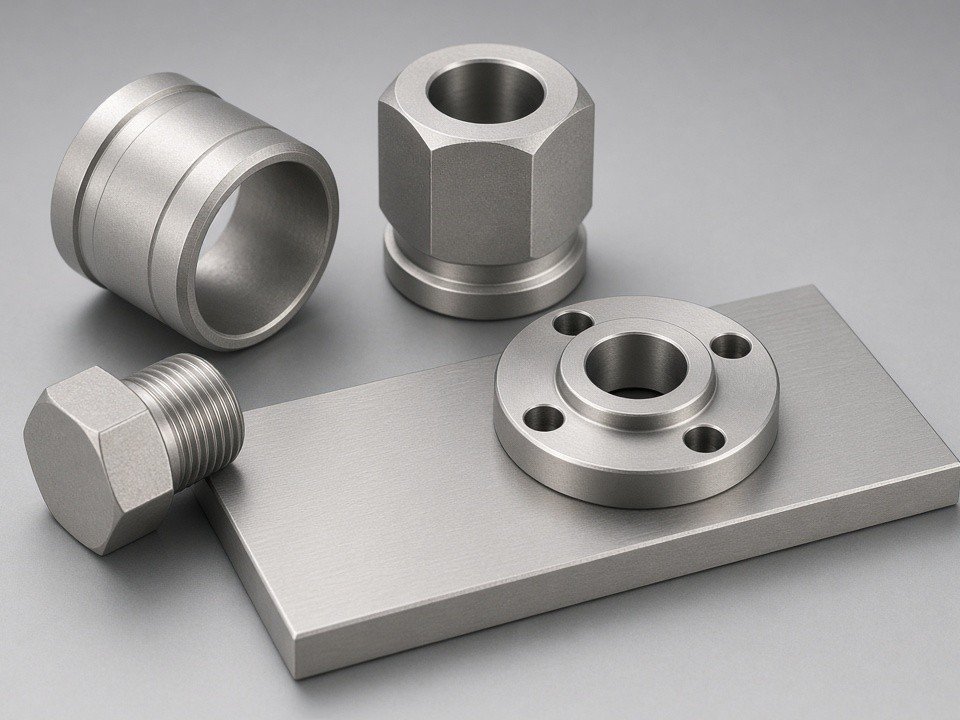
Material selection
Where Grade 2 can fit
Commercially pure Grade 2 combines corrosion resistance, moderate strength and formability. It can suit components where exposure conditions matter and the higher strength of a titanium alloy may not be necessary.
Chemical processing
Housings, brackets, plates and fittings, subject to review of the process environment.
Marine systems
Custom components exposed to seawater, with suitability assessed against service conditions.
Medical and scientific equipment
Components for medical, laboratory and scientific equipment, with project-specific documentation defined up front.
Formed and machined parts
Sheet covers, enclosures and custom components for instrumentation and industrial systems.
Review the full operating environment
Titanium performance depends on factors including temperature, concentration, flow, crevices, contact with other metals, and cleaning or sterilization methods. Share the intended use so material selection can be reviewed against actual service conditions.
Grade 2 vs. Ti-6Al-4V
Choose by engineering priority, not material name alone
Grade 2 is commercially pure titanium; Ti-6Al-4V is an alloy with higher strength and a different balance of properties. Neither is a direct substitute for the other.
If a design is strength-limited, the alloy may be necessary. If forming and corrosion resistance are central and the strength requirement allows, Grade 2 may be a better fit. We can review the drawing, operating conditions and expected quantity before quoting.
| Consideration | Titanium Grade 2 | Ti-6Al-4V |
|---|---|---|
| Material type | Commercially pure titanium | Titanium alloy |
| Strength | Moderate | Higher |
| Formability | Generally better suited to forming | More limited for many forming operations |
| Corrosion selection | Often selected for corrosion-focused applications | Selected when higher strength is needed; suitability depends on environment |
| Machining | Requires titanium-specific process planning | Also requires careful machining; cutting conditions differ |
| Cost | Often less expensive, subject to stock, size and availability | Often higher material cost; total part cost depends on design and processing |
Grade 2 is not automatically the lower-cost option for every part. Material, stock availability, machining or forming route, setup and inspection all contribute to total cost.
Manufacturing capabilities
Machined, formed and fabricated routes
The best route depends on geometry, material form, quantity, tolerances, tooling and lead time. We assess the part and its critical features before matching it with a manufacturing partner.
CNC machining
Plan around critical features
BGCNC coordinates milling and turning for custom Grade 2 components. Titanium machining requires control of heat, tool engagement and chip evacuation; poorly planned cutting conditions can accelerate tool wear or affect surface quality.
- Process options: milling and turning, with 3-axis, 4-axis and 5-axis process evaluation.
- Design review: thin walls, deep pockets, small features, tight tolerances, datum strategy and inspection access.
- Production support: deburring, specified surface finishing, prototypes and low- to medium-volume planning.
Tolerances should reflect functional needs and inspection capability. Tightening every feature can increase machining and inspection costs without improving part performance.
Forming and fabrication
Assess the material form and geometry
Grade 2’s formability can suit certain sheet components. Partner processes may include laser cutting, bending and welding, with feasibility depending on thickness, bend geometry, part shape, weld requirements and the specified titanium condition.
- Review sheet thickness, bend radius, springback, cut edges and burr requirements.
- Define weld locations, post-weld finishing and dimensional control after forming or joining.
- Compare fabrication with machining from solid stock to understand material use and overall cost.
Not every partner or process suits every titanium job. The manufacturing route is selected for the project rather than assumed from a process used for another material.
Quality and surface requirements
Define traceability and finish before production
For corrosion-sensitive or regulated applications, material identity and documentation should be established at the RFQ stage. Surface condition, contamination control and handling matter alongside the material choice.
Our network includes partners operating under quality systems such as ISO 9001, ISO 13485, IATF 16949 or AS9100D. Certification availability and scope depend on the selected partner and the work performed, so project-specific requirements must be confirmed.
Material and inspection records
- Material certificates and lot traceability requirements
- Inspection reports and critical-dimension records
- Customer specifications and applicable quality-system needs
Surface and acceptance criteria
- Machined finish, roughness or visual acceptance limits
- Functional surfaces, sealing areas and fluid-contact regions
- Edge breaks, deburring and any specified treatment requirements
Handling and packaging
Clarify cleaning, protection, packaging and acceptable cosmetic marks on non-functional areas. State the functional reason for surface requirements where possible, especially for parts subject to sealing, process exposure or cleaning.
How projects are coordinated
One supply-chain interface for custom parts
Customers work with one BGCNC team while we coordinate engineering, supplier matching, production, quality requirements and delivery. The model suits overseas hardware and industrial companies managing high-mix, low- to medium-volume projects across multiple processes.
Our 10 manufacturing engineers bring more than 10 years of industry experience and help assess whether the proposed process fits the design and order profile. For changing demand, we can also consider whether the route should evolve from prototype to repeat production.
-
1
Review the application and design
Assess material choice, service conditions, geometry, critical dimensions and expected volume.
-
2
Match a practical manufacturing route
Compare material utilization, setup, tooling, secondary operations and inspection needs.
-
3
Confirm quality and delivery requirements
Agree on traceability, acceptance criteria, packaging and delivery details for the selected partner and process.
Project questions
What to clarify before requesting a quote
Is Grade 2 always more economical than Ti-6Al-4V?
No. Grade 2 is often less expensive as a material, but the total part cost also depends on stock, availability, design, process, setup and inspection. The strength requirement may also make the alloy necessary.
What affects suitability in a corrosive environment?
Temperature, concentration, flow, crevices, contact with other metals, and cleaning or sterilization methods can all influence material selection. Share the intended operating conditions for review.
Which files should I send?
STEP or other 3D CAD files help assess geometry. Include a PDF drawing when tolerances, notes or inspection requirements are specified, along with the revision level and required quantity.
Can I specify material traceability and surface acceptance?
Yes. Identify certificate or lot traceability needs, inspection records, surface criteria, handling and packaging in your RFQ. Availability and scope are confirmed for the partner selected.
Request a Titanium Grade 2 quote
Send your drawing for a manufacturing review
Share your part files and project requirements so the team can assess material, process, documentation and surface needs. STEP or other 3D CAD files are useful for geometry review; include a PDF drawing when tolerances, notes or inspection requirements are specified.
Email: info@bgcnc.com
Company address: Hongrongyuan · Honghu-Technologiepark, Bezirk Longhua, Shenzhen, China
Include these details in your RFQ
- Part files, revision level and key dimensions
- Required quantity and expected repeat-order volume
- Grade 2 material and certificate or traceability requirements
- Intended application and operating environment
- Surface finish, inspection and packaging requirements
- Target delivery date and destination