
Injection mold tooling in China
Injection Mold Tooling for Long-Term Production
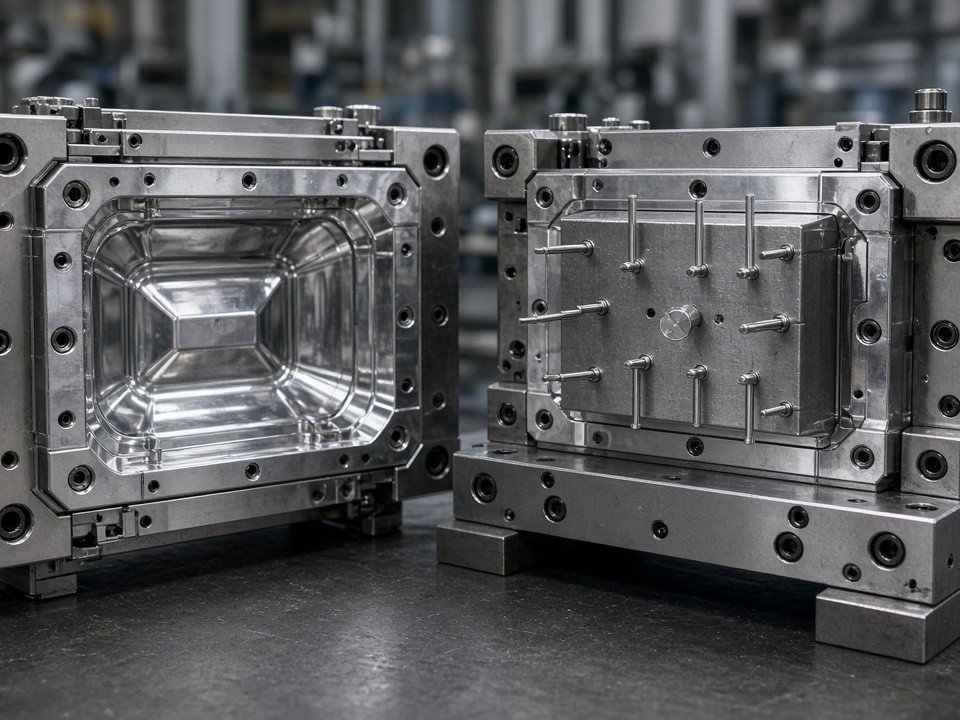
Planning to manufacture plastic parts in China? BGCNC coordinates injection mold tooling through proven manufacturing partners, with engineering support for design review, tool selection, trials, revisions and production planning.
We assess tooling investment against expected order volume, part requirements and product lifecycle—not simply the lowest initial mold price. That helps you weigh upfront cost against the likely cost and reliability of producing parts over time.
Send 3D files, drawings, material requirements and estimated annual volume. We’ll help identify the information needed to quote tooling and production.
10
Manufacturing engineers
10+
Years of industry experience
50+
Proven core partners
One point of contact
Engineering communication, supplier coordination, quality follow-up and delivery.
Partner matched
A suitable manufacturing partner is selected for each project’s requirements.
Production minded
Tooling choices are reviewed against forecast, part needs and expected service life.
Coordinated tooling support
Engineering review through repeat orders
BG CNC coordinates work through a network of manufacturing partners developed through real project cooperation. We do not assign every mold to one factory; we match the project to a partner suited to its technical and production needs.
Our team helps connect the decisions made during design and tooling with the requirements of sampling, quality control and ongoing production.
Design and process
- Design for manufacturability (DFM) review
- Assessment of injection molding against other processes
- Part geometry, material and production requirement review
Tool selection
- Tool structure and cavity-count planning
- Mold steel and expected tool-life review
- Cooling layout and cycle-time considerations
Trials and revisions
- Toolmaking coordination and trial management
- Sample review and feedback coordination
- Agreed design or tooling change follow-up
Production support
- Production planning and quality inspection
- Supplier communication and delivery coordination
- Logistics support for international orders
BG CNC has 10 manufacturing engineers with more than 10 years of industry experience. Our wider network includes thousands of suppliers and a core group of 50+ proven manufacturing partners.
Investment planning
Plan the mold around lifetime volume
The right tooling investment depends on more than part geometry. We review resin, annual demand, expected product lifecycle, quality requirements, lead time and target unit cost together.
A lower-cost mold may fit a limited run or a product still being validated. For a product expected to stay in production for years, a more durable tool or different cavity configuration may reduce cost and risk over its lifetime.
Keep investment aligned with what you know today
For a product in validation or a limited run, the initial tooling cost and flexibility for potential design changes may carry more weight. If demand is very low or the design is changing frequently, we can assess whether 3D printing or CNC machining is more appropriate before committing to production tooling.
Evaluate capacity, durability and service life together
For forecast repeat production, compare expected lifetime quantity, cavity count, tool durability, target cycle time and likely maintenance needs. A higher initial investment may be justified when it supports the product lifecycle and planned output—but the right choice depends on the project, not a standard mold specification.
Expected total quantity and annual production
Prototype, launch and forecast volumes
Part complexity, wall thickness and cosmetic needs
Resin, additives and processing conditions
Tooling cost compared with part price and service life
Potential design changes as the product develops
Before quotation
Mold details that shape the proposal
A useful tooling quote should describe the proposed approach, not just price and lead time. We coordinate with the selected mold partner to clarify the main design and production assumptions.
01 / Tool structure
Designed around the part
Geometry, undercuts, parting line, surface requirements and ejection method influence mold structure. Depending on the part, the toolmaker may propose inserts, slides or lifters, as well as a runner and gating arrangement.
We review the proposal against part function, manufacturability, maintenance and expected production. The final structure is confirmed with the mold partner against the current design and process requirements.
02 / Steel and tool life
Make the tooling basis visible
Steel selection should reflect resin, production quantity, wear or corrosion considerations, surface finish and maintenance plan. We ask the toolmaker to identify the proposed steel and relevant treatment details.
Expected tool life is an estimate tied to design, material, processing conditions, maintenance and usage. It should not be treated as a universal guarantee unless the project terms explicitly state one.
03 / Cavity count
Balance output with investment
A single-cavity tool may reduce initial tooling cost and suit lower volumes or larger parts. Multiple cavities may improve output for suitable parts, while affecting tool cost, layout, filling balance and quality control.
We consider forecast volume, target cycle time, part dimensions and budget before coordinating a cavity-count proposal—avoiding unnecessary capacity or a tool that cannot support planned demand.
04 / Cooling and cycle time
Connect the design to production conditions
Cooling layout affects cycle time and part consistency. The mold partner should assess it in relation to geometry, wall sections, resin and expected production conditions. Where relevant, we help clarify the cooling approach and assumptions behind the estimated cycle time.
Cycle time and output should be confirmed through trials and production data. They can vary with the machine, resin, mold condition and processing setup.
Approval and iteration
Trials, sample review and revisions
Tooling approval is a process, not just a shipment of a mold. We coordinate trial planning and supplier communication so sample evaluation, open issues and requested changes stay visible.
-
1
Agree on what a successful sample means
Align on critical dimensions and tolerances, material and appearance, parting line, gate and ejection marks, fit or assembly needs, inspection records, sample quantities and trial conditions.
-
2
Review samples and document feedback
Evaluate samples against agreed criteria, identify open issues and coordinate feedback with the mold partner.
-
3
Authorize and track agreed changes
Changes to part design after tooling begins may affect cost, schedule or mold structure. We recommend documenting design approval points and the process for authorizing modifications before production.
Trial stages, sample quantities, inspection records and revision costs depend on project scope and should be confirmed in the quotation.
Long-term responsibility
Clarify tool ownership and production responsibility
For overseas customers investing in tooling in China, responsibilities matter beyond the initial mold build. Agree the arrangements before work starts so tooling, repeat orders and future changes are managed with fewer surprises.
BG CNC coordinates the project and supplier communication.
The selected manufacturing partner builds and maintains the mold under the agreed project terms. We help clarify these arrangements before production begins.
Document these points in your project terms
- Who owns the mold and when ownership takes effect
- Where the mold is stored and which facility uses it
- Who handles maintenance, repair and refurbishment
- How mold changes are requested, approved and priced
- What happens if production moves to another supplier
- Who is responsible for scheduling and quality records
- Whether storage, maintenance or transfer costs apply
Connected manufacturing
One contact for tooling and repeat orders
An injection mold project may also require machining or finishing, inspection, assembly, packaging and international logistics. Customers work with one BG CNC team while we connect communication across engineering, suppliers, production, quality and delivery.
Our partner network also covers CNC machining, sheet metal fabrication, 3D printing, die casting, forging and other custom manufacturing processes when a project requires them.
Project-specific requirements
For certification, material traceability or inspection documentation requirements, we can match the work with a suitable partner where available. Certification availability and scope depend on the manufacturing partner selected for the project.
Manufacturing route advice
If the design is still being validated, we can compare injection molding with 3D printing or CNC machining. Injection molding may become more suitable as volumes increase.
Request preparation
Information to include in your RFQ
Share what you have available. If some details are not final, send the current design and forecast; we can identify open questions during the engineering review.
Process fit
Is injection mold tooling right for your project?
We compare possible manufacturing paths against volume, part design, material, target unit cost and product lifecycle. The aim is a practical manufacturing recommendation—not to push every project into injection molding.
Worth evaluating when
- You need repeatable plastic parts.
- Forecast volumes can support the tooling investment.
- The design and material requirements are sufficiently defined for production planning.
Compare alternatives when
- The design is changing frequently.
- Demand is very low or the part is still being validated.
- A different process may better suit current volume and timing.
Common questions
Injection mold tooling considerations
Is the cheapest mold always the best choice?
Not necessarily. The right investment depends on expected quantity, part requirements, production lifecycle and the reliability needed over time. A lower-cost mold may suit a limited run, while longer production may call for a different approach.
Can you guarantee mold life or cycle time?
Tool life and cycle time depend on design, materials, machine and processing conditions, maintenance and usage. Estimates and any guarantees should be made explicit in the project terms and confirmed with trial or production data where applicable.
What if our design is not finalized?
Share the current files and forecast. We can review what is available, identify open questions and assess whether an alternative process is more appropriate before committing to production tooling.
Who is responsible for the mold after it is built?
The selected manufacturing partner builds and maintains the mold under agreed project terms. Ownership, storage, maintenance, changes and transfer arrangements should be documented before work starts.
Start with an engineering review
Request an Injection Mold Tooling Review
Send your part files, material requirements and volume estimate to BGCNC. We’ll review the project, coordinate with a suitable tooling partner and discuss what is needed for a clear tooling and production proposal.
A good starting point is your 3D model, available drawings, material preference and estimated annual or lifetime quantity.
Email: info@bgcnc.com
Address: Hongrongyuan · Honghu-Technologiepark, Bezirk Longhua, Shenzhen, China